A risk capital approach to education investment

In 2007/08, the South African government spent R105bn on education, while corporate social investment (CSI) in education amounted to R1.3bn. While a significant amount of money, the CSI contribution is a relatively small (about 1%).

SA spends a higher percentage of it’s GDP on education than most other countries (that achieve better results in international education tests). This tells us that there isn’t a shortage of money; our problem is that we don’t get value for money. In such a system, how can non-government stakeholders who care about education play their part? How can they help to achieve value for money? How can they support overall education goals, while not doing the work of government (something that is all to easy to do)?

Corporates, like government, are investing large sums of money but are seeing very little impact. At a recent workshop attended by corporates that invest in education, Ann Bernstein, executive director for the Centre for Development and Enterprise, described how the current approach of uninformed ad hoc interventions are helpful, but not enough to fundamentally improve the education system. There is simply not enough sharing of resources and efforts between players in this space. The randomness, lack of coordination and lack of serious engagement with the systemic issues all undermine the impact of the interventions.

More importantly, though, she suggests that CSI should be thought of as “risk capital” to test innovative ideas that can go to scale. One percent of the total spend is a nice amount to try out innovative ideas, alternative approaches to teaching and learning, etc. We should think of it as R&D money.

Nick Rockey, MD of Trialogue, re-iterated these points at the CSR in Education conference. There is a need for CSI money to be spent in a co-ordinated and rigorous way. What does this mean? Corporates should think about whether they are addressing systemic issues, or whether the success of their intervention is dependent on systemic support. They should invest in demonstration projects that have monitoring and evaluation components built-in. Lessons and best practices should documented and shared. Replication of projects must be kept in mind. In this way it will be possible to influence and support government, thus achieving big impact with relatively low budgets.

I’m pleased to say that the Shuttleworth Foundation has embraced this informed, rigorous and open “risk capital” approach. After a number of years of ad hoc interventions that were valuable in their own right, but did not collectively “move the needle”, we now look at interventions (projects, research, advocacy, etc.) whose outcomes can influence, support or shake-up the whole system. That is the best way for us to get value for money.

A literacy success story

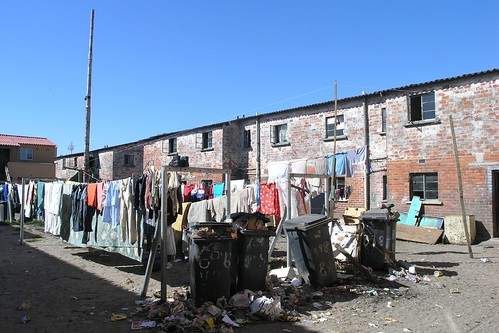
A success story of improving the reading and writing skills of learners is the Zimasa Community School in Langa, Western Cape. Having spent the weekend in Langa for the CSR in Education conference, I realised just how under-resourced most of the schools there are. The attendant ills of poverty are evident in Langa: overcrowding, litter, crime and lack of infrastructure. These factors make it difficult for teachers to deliver a sound education. Similarly, learners struggle to find the space and quiet to do their homework. Imaging trying to study for a test while living in a hostel originally designed for 16 men and now housing 16 families?

Hostels in Langa (Image by mtlp, CC-by-nc-nd)

Despite these difficulties, the principal and teachers of Zimasa Community School have managed improve the percentage of learners who achieved 50% or more in a literacy assessment from 8% (2005) to 40% (2008). That’s an increase of 32%! Or an increase of 400% on the baseline results.

Some of the contributing factors for the achievement include institutionalising reading and writing time in class, the school’s dedicated teachers, engaging parents around the learning needs of their children, and allowing learners to read, write and take the literacy test in their mother-tongue (mostly isiXhosa). (It’s not possible to tell if any of these is the dominant variable for the success.)

For the most part, education performance in SA (in fact, globally) is tied to socio-economic status. But it is success stories such as this that demonstrate that it is possible to significantly improve education performance despite difficulties.

Read more about this success story in The Teacher.

Schools ICT conference 2008: Notes

The Schools ICT conference was held from 1-3 October 2008 in Cape Town. In addition to my blog post about the conference, notes about other interesting presentations are below.

Thumb tribe tackles mathematics
Laura Butgereit, Meraka Institute. Download presentation (5.6Mb).

  • The thumb tribe is everywhere. You recognise them by their poor posture and absent mindedness.
  • MXit: 45% of subscribers are 12-18 years old.
  • Would the thumb tribe compete at maths skills competitions on MXit?
  • Dr Math began in January 2007. Now have 3,700 kids using the it. 1 tutor can handle about 100 kids an hour.
  • Over Christmas holidays 2007-08 they added a simple addition competition.
  • The thumb tribe found it within a day and started competing — over the holidays!
  • When someone else beats your best score, you get a message telling you this.
  • Kids were playing at 11:30pm on a Sunday night doing grade 8 geometry.

Competition:

  • New participant is sent the current TopScore name and score
  • Participant receives a problem
  • Participant replies
  • After 10 replies, the participant has the opportunity to become the TopScore
  • The “old” TopScore is invited back to reclaim his/her title

Types of competition: + – / *, prime factors, root of a straight line, real factors of a quadratic, real roots of a quadratic, etc. The kids choose which competition they want to enter.

Success in maths benefits social behaviour: as a player climbed from the bottom to the top of the score board, she changed her name from PIMP(*)STAR to QunOfMaths to smartyCAT

Ethics challenges and measures of Dr Math:

  • Approval from the Tshwane University of Technology Ethics Committee
  • Collect no personal info
  • MXit provides the cell no. Dr Math protects them all
  • All humans who come into contact with our system must sign an agreement/code of conduct about handling cell phone numbers
  • Participants are told NOT to give their personal details
  • All conversations are recorded (for research, to protect the kids and the tutors)
  • Good tutor handling of situations are emailed to all the tutors

With a Gmail account, any teacher can talk to MXit subscribers (through Google Talk when logged into gmail) for after hour tutoring.

Forget about websites, schools need wapsites
Rodney Johnson, Rocklands High School, Mitchells Plain, spoke about how they’d used Kwikwap so set up a WAP site for their school. The site can be managed from the web or cellphone, and can be accessed via both.

Handheld Learning 2008: Notes

Handheld Learning was held from 13-15 October 2008 in London, UK. In addition to my blog posts about the conference, notes about interesting presentations, papers and projects are below.

Putting Philosophy into Practice
At the Handheld Learning 2008 conference: Laurie O’Donnell, Director of Learning and Technology, Learning and Teaching Scotland (LTS), on Putting Philosophy into Practice.

Philosophy A Philosophy B
Education Broken but can be fixed (quickly) Long term investment in the future
Technology Drives change Enables, supports and accelerates change
Teachers Another problem that needs to be fixed Supported professionals
Learners The future workforce (so need to skill them up for that) More than just the future workforce
Innovation Let a thousand projects flourish Got to be scalable and sustainable
Success Input targets and attainment Wider long-term benefits
Curriculum Don’t trust the teachers Guidance and support for teachers

The problems that are constantly highlighted:

  • Teachers are insecure when considering bringing technology into the classroom. They mostly just prevent it from happening.
  • Learners know more about technology than their teachers.
  • Is today’s education really preparing learners for the future?
  • How to assess web 2.0 creations?

Keri Facer
There is general consensus on what 21st century learning skills are. To carry on thinking of what the list of skills might entail is becoming less and less productive. The big challenge is how to bring the development of those skills into the schools.

She believes that we need to stop designing curricula for young people and start designing with them.

David Whyley
Headteacher and consultant for learning technologies presented the Learning2Go project (blog):

2001: 14 devices BECTA trial
2007: Over 3,000 devices — all with wireless and imaging — in the hands of learners in Wolverhampton. Parents contribute to cost of devices. Learners generally look after the devices.

  • Truancy down
  • Maths and Science grades improved
  • Boys catching up on girls in English grades
  • Learners more motivated

My Mobiliser

Some learners, especially boys, will only read on screen: ebooks.

  • They can be annotated (notes, drawings).
  • Easily shared (with annotations and questions overlaid).
  • Dictionary lookup.
  • Are sometimes free, e.g. Shakespeare.
  • Can be added to with scanned images or text from the learners.

Because devices are wifi enabled:

  • The teacher can easily distribute files to everyone in a class.
  • The teacher can easily receive files (assignments) from the learners.

Challenges:

  • Sustainability
  • Giving teachers the space, time and permission to innovate
  • Defining what is “acceptable” digital work
  • Teacher PD
  • Blending personalised 24/7 access to the present school structures
  • Assessment needs to recognise different media submissions
  • Volatility of a “consumerised” hardware market
  • Connectivity costs (school wifi, 3G, GPRS, etc.)
  • Teachers reluctance to change
  • No models of effective integration of mlearning
  • No single solution for total mlearning integration

Have now added social networking: Gold Star Cafe (for 7-11 year olds, safe and secure space)

To use the mobile in the classroom, need:

  • Office suite
  • Way to collect assignments from learners

Focus on Scotland
One classroom uses Wii’s Endless Ocean, a game where the player is a scuba diver who explores the ocean. There is only one Wii console in the classroom. To workaround this constraint the teacher has created a number of activities that compliment actual Wiii game play, e.g.

  • Learners have to write a persuasive letter/essay on why they should be one of the key divers in the game.
  • Creative writing: learners have to keep a paper-based diver’s log. They create a diver and write an autobiography for him/her. Pieces also include drawings (art outcomes).

Thus, the writing meets the following curriculum outcomes:

  • Persuasive writing
  • Writing for information
  • Imaginative writing

General:

  • Coherence of learning — NB to tie the game-based learning to offline activities, e.g. posters, discussions, etc.
  • Learners were asked to design their own Dr Kawashima’s Brain Training game. The design was in the form of a narrative, written on paper.
  • The game play can be done on one console by the whole class, but the curriculum learning outcomes are enabled around that. The game narrative sets the context for these learning activities. So, games enhance the learning experiences that the teachers have planned.

Matt Lock, Channel 4
When designing educational experiences, he is not interested in the technology but rather in the “spaces”. Each of these spaces have their own qualities and user expectations:

  • Secret spaces: Mobile, SMS, IM (transactional activities: stroking behaviour)
  • Group spaces: Bebo, Facebook, Tagged, etc.
  • Publishing spaces: LiveJournal, Blogger, Flickr, Photobucket, etc.
  • Performing spaces: Second Life, WoW, Home, etc.
  • Participation spaces: marches, meetings, markets, events, etc.
  • Watching spaces: TV, gigs, theatre, etc.

Example project: Battlefront (description of project)

  • 20 young people between 16-21 years old that are being tracked over 9 months about a change they want to make in their lives, e.g. campaign against Size Zero models.
  • Each person has their own Bebo profile and Flip video cameras.
  • The Battle Front project also has a profile on Bebo that aggregates the others’ content.
  • The participants were chosen through a competition.
  • Mentors who have experience with campaigning and social innovation help the participants.
  • Various media track the participants, e.g. TV.

How to get young peoples’ attention:

  • Distribute everywhere
  • Start at least 6 weeks before launch
  • Go to where your audience is
  • Competitions/virals can work, but need to be relevant
  • Make games!

Keeping attention:

  • Make it easy to find content
  • Repackage content as catch-ups
  • Make it easy to subscribe/sign-up
  • Tweak and redesign throughout the project
  • Bring the most popular stories to the top
  • Make games!

Turning attention into action:

  • Make it easy (not that many people actually make videos), e.g. get them to text in
  • Reward people constantly
  • Include audience activity in the story
  • Make games!

mLearn 2008: Notes

mLearn was held from 8-10 October 2008 in Telford, UK. In addition to my blog posts about the conference, notes about interesting presentations, papers and projects are below.

Towards a pedagogy-driven account of mobile learning
This morning’s mLearn 2008 keynote was titled Towards a pedagogy-driven account of mobile learning by Diana Laurillard, Institute of Education, London Knowledge Lab.

Twentieth century learning theories, e.g. social constructivism, constructionism, etc., generally propose the same thing: that the “engine” driving learning is a process of iterative development of an idea  by a learner, which he/she refines through proposing it, defending it, questioning it, etc., and ultimately can apply as a concept to other contexts.

Laurillard proposed a conversational framework that represents different learning approaches as a way to hold up digital technologies against.Teachers need to challenge what the technologies — which are first and foremost designed for business and leisure — really afford for education and how they support pedagogical requirements. To reverse the direction of purpose: from business- and leisure-driven to pedagogically-driven.

Learners’ needs go way beyond the learning offered by Facebook. The educational voice needs to be more powerful to articulate how technology should serve learners’ needs, instead of always thinking how we can use the technologies available for learning (typically with a question such as this: “Facebook is very engaging for learners, how can we use it for education?”)

Obstacles to mobile uptake in SA
The paper presentation of Obstacles and Challenges Encountered in South African Secondary School Mobile Learning Environments by Sumi Eicker and Machdel Matthee provided these valuable insights:

  • SA’s teenagers are ready for mlearning but need
  • edu systems that can cater for it
  • educators that can implement it
  • parents that are open to the idea

How to reach learners that don’t have teachers?

MiLK project
The Mobile Learning Kit (MiLK) enables games that connect students, curriculum and everyday environments using simple web and mobile technologies. A scaffolding to build narratives. Debra Polson, interaction designer and researcher, Queensland University of Technology, presented interesting MiLK projects that involve learners designing and playing games. The process for this is as follows:

  1. Explore
  2. Research
  3. Design (Peer assessment — because peers play the games that learners create — is a strong motivator to apply one’s self during the game design.)
  4. Publish
  5. Play
  6. Reflect

We are considering running a MiLK project at next year’s SciFest Africa in Grahamstown.

Also see Cipher Cities and Scoot, a treasure hunt using lo-fi tech. Parents and kids play together.

Podcasting in higher educational institutes

In a pilot project, podcasts were found to help “connect” — emotionally — distance education students with a university. The real person voice helped to create a human connection between tutors and students, which reduced both student and tutor anxiety.

Engaging the learner through game-based mobile learning environments
Lisa Gjedde, Danish School of Education, Aarhus University. Background: mobile learning may offer contextual learning potentials. Games can create user engagement and motivation.

In this project, three mobile platforms were developed to help answer the research question: To which extent can MLEs support and enhance collaborative learning?

The mobile games include multi-modal learning tasks: auditive, visual, tactile, kinestetic. Player feedback: “You were the one doing it all the time, and not the cellphone … you walked around and did it.” Engagement through: fun, context, collaboration, movement, challenge-level. Learners said that the group work (4 member teams)  made them feel positive about collaboration in the future. Gave real-world context to maths. Conclusion: need for further research.

Language learning “on the go”
LondonMet e-packs (online language learning materials repurposed for use on mobile phones) were developed for adult language learners at London Metropolitan University to support learners after-hours.

Pedagogical choices for mobile learning objects (MLOs):

  • Reusable, granular and decoupled
  • Presentation of language in context
  • Layering of activities to develop skills
  • Varied and appropriate feedback features, e.g. not just “you got the question right” but “read this text to find out if you got it right or not”

Challenges in designing MLOs:

  • Need to break lessons into smaller units

Designing for cellphones:

  • What phone? Software?

What did the students think of the e-packs? Liked them. One said they offered “freedom from the computer.”

mLearning offers small, bite-size learning opportunities. Language learning is comprised of many skills that need to be acquired: reading, writing, listening, comprehension, vocabulary, pronounciation, etc. Bite-size learning activities, which constitute a larger lesson, definitely have their place, especially when done in context.

Researching mobile learning
Giasemi Vavoula (gv18@le.ac.uk) presented on the challenges associated with researching mobile learning.

Challenge 1: Capturing learning contexts

  • Social assessment methods: Diaries, questionnaires, post-interviews, attitude surveys
  • Need to triangulate mixed methods of assessment (technology-based and social-based)

Challenge 2: Capturing learning outcomes

  • Fixed space, e.g. classroom, has proven set of ways to assess cognitive learning, e.g. exams. Not so with mobile.
  • Alternatives to measuring outcomes are needed, e.g. learner perceptions (attitudes), assessing learner-created artefacts. But still no consensus on assessment.

Challenge 3: Challenging ethics

  • Mobile technology translates (most often) to personal technology. Can participants really consent to unknown scenarios?

Challenge 4: Formal vs informal?

  • “Seeing informal and formal learning as fundamentally separate results in stereotyping and a tendency for the advocates of one to see only the weaknesses of the other. It is more sensible to see attributes of informality and formality as present in all learning situations….The challenge is to identify such attributes, and understand the implications of the interrelationships between them.” Colley, H., Hodkinson, P. & Malcom, J. (2003) Informality and formality in learning: a report for theLearning and Skills Research Centre, p. 8.

Mobile learning foresight: the future of learning is already here
Mark Kramer, University of Salzburg

What’s already here:

  • Mobile content, e.g. iTunes U
  • Multimodal inputs, e.g. Jott
  • Aggregated inputs, e.g. Twemes
  • Visual comms (as opposed to text-based), e.g. Qik, Seesmic

Future predictions:

  • Self-organised learning: learners grouping and directing themselves
  • More collaborative through ubiquitous social networks
  • Location based
  • Context aware
  • Conversational

But with increased velocity in our exposure to information and communication, there is a technological burden.

Tech-enabled language learning: Making the link between noticing and learning
It is important that anyone learning a language notices when they are saying something incorrectly. Suggested process: Notice, record in a diary (consolidate), reflect in a group (hopefully). There is usually not much feedback to teachers about what language learners need “in the world.” This project shows teachers the gaps and how learners are progressing. After showing learners the benefits of noticing (through video examples), they are asked to use (mobile) diaries to capture what they notice when not in class. These diary entries are then discussed in class — physical or virtual.

Communications: anywhere, anytime

This morning’s mLearn 2008 keynote was titled Communications – anywhere anytime by Dr Mike Short, VP R&D, Telefonica Europe. 95% of 15-24 year olds in European countries have a mobile phone. More stats at GSM World — latest report. Mobile is not going to go away.

His thoughts on the future of the web:

  • Web 1.0: Users surf, consult
  • Web 2.0: Users create, collaborate, share
  • Web 3.0: All of the above, but in a supported, integrated way. Now the web suggests, services discover. Life happens on the web, which provides storage and processing power.

Assessing the value of mobile learning: the evidence challenge

This afternoon’s mLearn 2008 keynote was titled Assessing the value of mobile learning: the evidence challenge by Vanessa Pittard, Director: e-Strategy, Becta.

Mobile ICT use in Britain not all rosy. 84% of teachers said that they rarely/never use mobile ICTs to allow learners to work together for school activities. Only 6% of schools have campus-wide wifi.

The cost/benefit analysis and the evidence challenge

Moving from nice-to-have to must-have: developing the business case for mlearning:

  • Concept — not technology: practice; customer/user benefit
  • Buy-in — addressing key decision maker agendas
  • Readiness and planning — “should I invest now?”
  • Decision — options and practical choices
  • Management — risks and solutions; addressing barriers
  • Justification — cost/benefit analysis

Quantified benefits are the hardest part (examples):

  • Learner satisfaction and engagement (because of ICTs) measures
  • Learner time on task (through ICTs)
  • How much time to prepare for the lessons?
  • How long would it have taken to achieve the same lesson without ICTs?
  • Quality of outputs?
  • Impact on learner capabilities and learning behaviours?
  • Formal outcomes and progression?

Themes:

  • Engagement/inclusion in learning
  • Learner autonomy
  • Collaborative/distributed learning
  • Experiential/situated learning
  • Bridging formal and informal learning

There’s a lot to say to stakeholders, but important to focus on learner and learning outcomes. Also, could the same learning have been achieved without the ICTs?

Miscellaneous bits and pieces

  • Myst2008 — location-based game, played at SciFest in Joensuu. Perhaps play at SciFest in Grahamstown?
  • The MOBO City: A mobile game package for technical language learning — Focus was on teaching technical English vocabulary to students. Based in Iran.

Everything bad is good for you?

Next up at the Handheld Learning 2008 conference: Steven Johnson, cultural critic and author of Everything Bad is Good for You.

He spoke about three types of increasing complexity in popular culture experiences: content, participation and interface.

Of interest to me was what he said about LOST. The TV series LOST is very complicated: lots of characters, inter-related narratives, cryptic clues, etc. He argues that it’s one of the most complex series of all time. The TV creators of today are able to take this non-interactive medium and conceive it as an interactive one, because they can rely on collaboration between participatory viewers who discuss the show on the web.

People also say that the attention span of the youth is reducing in today’s popular culture world. Not so, says Johnson, as he compares the time it takes to read a book, play a game, watch a TV show and follow a blogger. The book, which apparently young people don’t read anymore because they only respond to quick interactions, actually demands the least amount of time when compared with other popular activities of youth. Interesting.

Becta: Next Generation Learning

The Handheld Learning 2008 conference, held in London, UK, kicked off this morning.

First up: Andrew Pinder, Chairman of Becta, which focuses on how to use technology to support teaching and learning in schools. It will launch a “surge” to address the lack of effective and productive use of technology in schools. Why? Because research proves that, when correctly used, technology does support educational attainment and raise grades. For young people, probably the only time they’re not using technology is when they’re in school. This is puzzling and demotivating for them, especially as they know that ICT literacy is required for 95% of jobs.

The forthcoming campaign — called Next Generation Learning — is aimed at teachers and parents, to demonstrate the benefits and necessity of using technology in education. They will also lobby government to ensure home access for all. Not PCs for all, but affordable access through any device with a screen. They are talking to the corporate sector to put together packages for low-income homes. They are interested in getting a good deal for the learner that results in educational outcomes.

In January ’09 Becta is hosting a meeting of Education Departments from around the world (SA is attending) in an effort get the sentiment of Next Generation Learning being implemented globally.

Wildfire activities: New patterns of mobility and learning

A truly interesting mLearn 2008 keynote was titled Wildfire activities: New patterns of mobility and learning by Prof Yrjö Engeström, Professor of Adult Education and Director of the Center for Activity Theory and Developmental Work Research at the University of Helsinki. Engeström is best known for his work around activity theory.

In his presentation he asked the audience to reconsider what mobility really means, not just movement enabled by mobile ICTs but movement in terms of information flow, production, workplace dynamics, etc. Mobility is presented as the underpinning of wildfire activities. Read on to understand what this means … (it’s a long post, but he’s a seriously bright cookie and worth hearing out.)

Reconceptualising mobility
Kris Gutierrez (UCLA) posits that in all education there is the official script of the educator, and the often invisible counter-script of the learners. These frequently collide, but when they engage in dialogue and hybridize, we get powerful “third spaces” of learning.

Historically, mobility was directed from the periphery to the centre, from novice to master. In an industrial/production world the movement is linear, from beginning to end (assembly line, business process or individual career). But this is breaking down today.

In wildfire activities of social production, mobility takes the shape of expansive swarming and multidirectional pulsation, with emphasis on sideways transitions and boundary-crossing. Wildfire activities are seen in some web 2.0-enabled communities. But he wanted to talk about the “old” new wildfire activities, e.g. birding, and not just web 2.0 phenomena like Wikipedia.

Historicising activity: from craft to social productions

Nature of object Locus of agency Coordinating mechanism
CRAFT Personal object Individual actor Identification and subordination
MASS PRODUCTION Problematic object Team Process management
SOCIAL PRODUCTION Runaway object (therefore never complete), e.g. Linux Knots in mycorrhizae (Think “legitimate peripheral participation” (Levine and Wenger, 1991)) Negotiation and peer review

What are wildfire activities and why they’re important?
Humans and organisations are seeking models that enable continuous, engaged, self-renewal, innovation and expansion, yet are sustainable and don’t burn out over time, e.g. skateboarding, bird watching and the emergency relief arm of the Red Cross.

Paradoxes of these activities:

  • Discontinuous but demonstrate longevity and persist over time
  • There is no mechanism that forces them to continue
  • Dispersed and distributed, yet well co-ordinated and aware of the whole in each node
  • Participants are offered little publicly recognisable rewards but are highly motivated

Important characteristics:

  • Resistant to thorough commercialisation
  • “Gift economy”, peer-to-peer or social production
  • Quick adoption and creative use of up-to-date ICTs, but little emphasis and depedency on them; no closed world of virtuality

Are not:

  • Just wikinomics or large numbers of people doing something together
  • Just open source
  • Just the Internet
  • Just social network sites

Nothing new about these communities, but almost no history or studies on them.

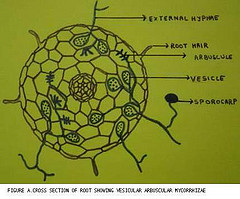
Communities as mycorrhizae

Mycorrhizae
Mycorrhizae
  • Craft community: relatively closed and stable, dominated by tradition
  • Mass production community: rule-governed, relatively transparent but clearly bounded and centrally controlled
  • Wildfire community: mycorrhizae-like, hybrid, poorly bounded, the centre does not hold

Mycorrhizae — a symbiotic association between a fungus and the roots of a plant — is a useful metaphor. They are hard to to kill, but also vulnerable (weather pattern dependent).

Hybrid mycorrhizae as communities:

  • Birding: hybrid of birder and researchers
  • Skating: skaters, merchandise sponsors and media

What it all means for learning?
Learning in wildfire activities — a working hypothesis:

  • Learning is mostly horizontal that crosses boundaries and ties knots between actors operating in fractured and often poorly charted terrains
  • It is subterrainian learning that blazes embodied and lived cognitive trails and social bonds that make the terrains knowable and livable
  • Self-reflective learning (skaters video tape themselves), birder report every observation. Lots of criticality, peer-review
  • It is learning by experiencing high-stakes personal involvement, risks
  • It is both quick improvisational adaptation and long-term design
  • It is holoptic — as opposed to panoptic — where every node can see all other nodes. It is oriented toward a global view of events while engaged in intense local action. Access from every node, but no central control

What does it mean for education systems? We don’t know. We are only beginning the research into this. Perhaps these activities are only oddities and have nothing to teach us, but he doesn’t think so.

Further research is needed into understanding what the motivators are, and what the desirable output is. We need to think through these questions from a school perspective too.

When something changes, that requires sense making. Sense making is learning. Therefor: Learning is based on difference.  Anything that shifts your location, your perspective, that is mobility and therefor that is learning.

Summary
Wildfire activities spread quickly, are hard to control, are characterised by irregular bursts of activity, are disruptive, are almost always perceived as illegitimate, contestable. Wildfire activities are a specialised form of informal learning. There is a love-hate relationship between vertical and horizontal activity communities, e.g. Microsoft and Linux. Very uneasy but necessary dialectical relationship.

His latest book: From Teams to Knots.

Image by INeedCoffee (CC-By-SA)